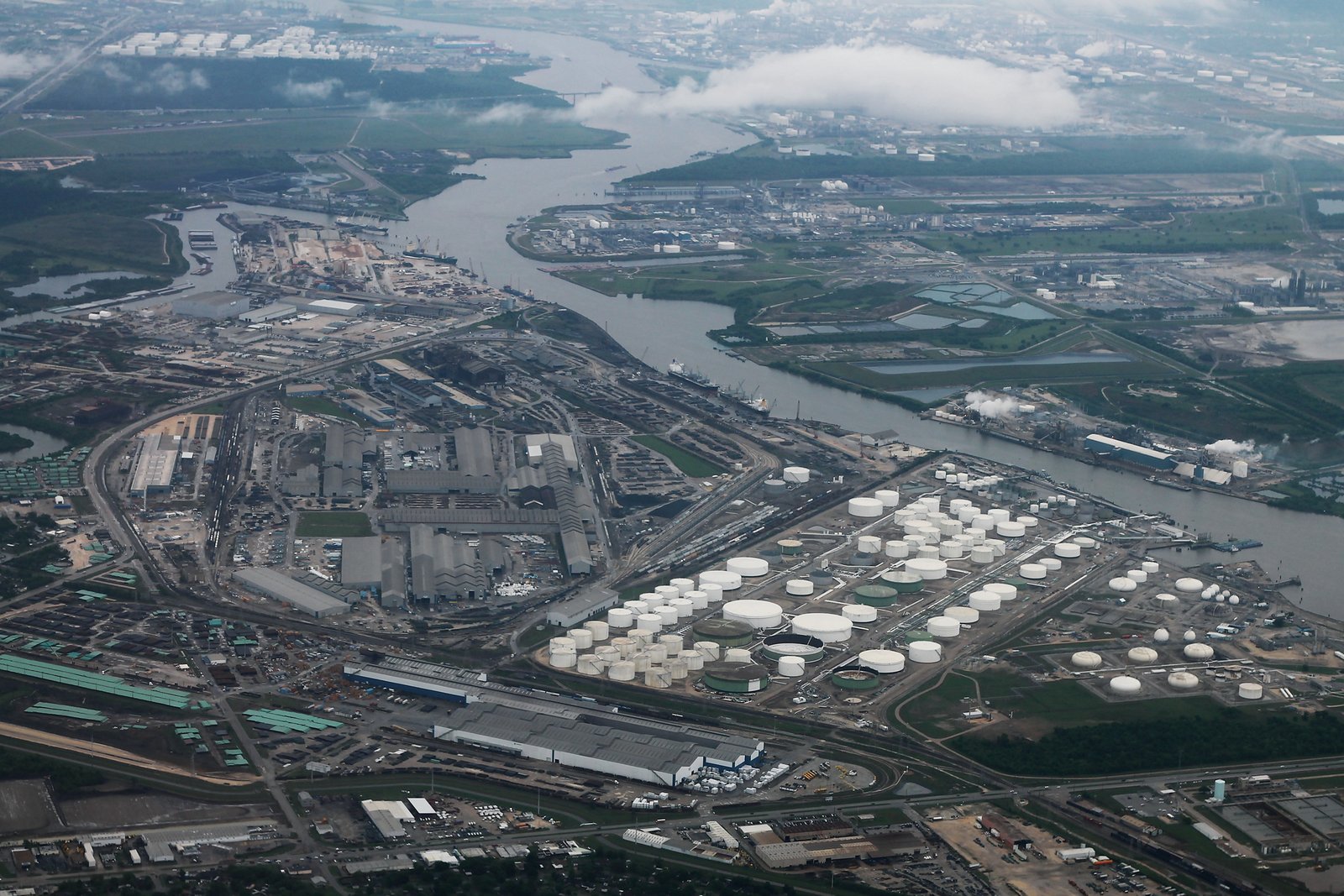
The Port of Houston continues to play a major role in Texas and the broader U.S. economy, with activity along the Houston Ship Channel generating nearly $1 trillion in economic value during 2025, according to a study conducted by Martin Associates on behalf of Port Houston.
The findings highlight the growing importance of the region’s maritime infrastructure as Houston expands its role in international trade, logistics, manufacturing, and distribution.
Port Activity Generated $986.9 Billion in Economic Value
According to the study, marine cargo moving through the Houston Ship Channel supported approximately $986.9 billion in total economic value across the United States in 2025. That represents an increase from the $906 billion recorded in the previous study covering 2022.
The analysis considered the economic value associated with cargo moving through the channel, including products such as steel, chemicals, and consumer goods. It also accounted for revenue generated by companies that depend on port operations.
The scale of this activity demonstrates how the Port of Houston extends beyond maritime transportation. Its operations support businesses and industries throughout Texas and other parts of the country by connecting domestic markets with international suppliers and customers.
Port Operations Support Thousands of Texas Jobs
The economic impact of the Port of Houston is also reflected in employment. Martin Associates found that port activity directly supported 92,330 Texas jobs in 2025, compared with 78,308 jobs in 2022.
These positions extend across a wide range of activities, including dock operations, warehousing, terminal management, transportation, and logistics.
The port’s contribution also reaches government revenues. The study estimated that port activity generated approximately $903 million in direct state and local tax revenue in Texas during 2025, up from $570 million in 2022.
These figures demonstrate the relationship between maritime trade and the wider regional economy. As cargo volumes increase, demand can also rise for transportation providers, warehouses, industrial facilities, distribution networks, and other supporting services.
Houston Ship Channel Continues to Expand
The Houston Ship Channel is a critical component of the Port of Houston’s infrastructure. Stretching approximately 52 miles, the channel is connected to a network of more than 200 public and private facilities.
Port activity has continued to grow in 2026. Foreign tonnage moving through the Houston Ship Channel increased by 16% during the first six months of 2026 compared with the same period in 2025, according to port officials.
The growth reflects broader changes in Texas, including population expansion, increased consumer demand, and continued industrial development.
As more people and businesses move into the state, the demand for imported consumer products, industrial materials, food, equipment, and other goods can increase. Ports therefore become an important part of the infrastructure needed to support that economic growth.
International Trade Creates New Logistics Opportunities
The expansion of trade through Houston is also encouraging shipping companies to develop new routes.
Crowley, a maritime, energy, and logistics company, announced plans for a weekly direct shipping service between the Port of Houston and Central America. The service is focused on fresh produce and other everyday consumer goods.
Greater connectivity with international markets can provide businesses with additional options for sourcing and distributing products. It can also increase demand for logistics services capable of moving cargo efficiently between ports, warehouses, retailers, manufacturers, and consumers.
For Houston-area businesses, this evolving logistics network can be particularly significant as the region continues to attract manufacturing, energy, healthcare, technology, and distribution operations.
Port Houston Plans Additional Infrastructure Investment
Growing cargo volumes are also creating pressure to expand port infrastructure.
Port Houston CEO Charlie Jenkins said the organization plans to purchase 10 additional wharf cranes to support continued expansion. Additional equipment can help terminals handle rising cargo volumes and maintain efficient operations as trade activity increases.
Infrastructure investment is particularly important for a major port because cargo growth can place pressure on terminals, storage areas, transportation networks, and equipment. Expanding capacity can help the port accommodate future demand while supporting the businesses that depend on reliable cargo movement.
What the Port’s Growth Means for Houston’s Economy
The Port of Houston’s expanding economic footprint reflects the interconnected nature of Houston’s economy.
Maritime trade supports far more than shipping companies and dock operations. Cargo moving through the region can generate business for trucking companies, warehouses, freight operators, manufacturers, distributors, retailers, and other service providers.
The port’s continued growth also reinforces Houston’s position as an important logistics and industrial center. As international trade expands and Texas’ population increases, Houston’s growing population and diverse communities also contribute to the city’s evolving economic and cultural landscape. Efficient transportation infrastructure becomes increasingly important to businesses operating throughout the region.
Conclusion
The Port of Houston’s nearly $1 trillion economic impact in 2025 underscores the importance of maritime trade to Houston, Texas, and the wider U.S. economy. With $986.9 billion in economic value supported by marine cargo, more than 92,000 Texas jobs directly connected to port activity, and hundreds of millions of dollars in state and local tax revenue, the port remains a significant economic engine.
Continued cargo growth, new international shipping connections, and planned investments in cranes and other infrastructure could further strengthen Houston’s role in global trade. As Texas continues to grow, the Port of Houston is likely to remain an essential link between international markets and the businesses and consumers they serve.
FAQs
Marine cargo activity along the Houston Ship Channel supported approximately $986.9 billion in total economic value across the United States in 2025, according to the Martin Associates study conducted for Port Houston.
Port activity directly supported approximately 92,330 Texas jobs in 2025, including employment in areas such as dock operations, warehousing, terminals, and logistics.
The Houston Ship Channel connects Houston-area businesses with international markets and supports a large network of public and private maritime facilities. Its activity contributes to trade, employment, tax revenue, manufacturing, logistics, and distribution across Texas and beyond.