North Texas is receiving national attention for the quality of conditions available to children, with three area cities placing among the top four in a new 2026 ranking of the largest cities in the United States.
The America’s Childhood Well-being Index, developed by ProCare Therapy, evaluated 100 of the country’s largest cities using factors related to children’s education, economic conditions, housing, access to parks and other aspects of community well-being.
Frisco, Plano and McKinney were among the strongest-performing communities in the study, highlighting the broader performance of several Texas cities.
Frisco Takes the Top Spot
Frisco, Texas, ranked first in the 2026 index with a score of 89.8. The city’s results included a reported child poverty rate of 3.9% and a third-grade reading proficiency rate of 89.4%.
These measures were among the factors contributing to Frisco’s position at the top of the study. The findings point to the role that household economic stability and educational outcomes can play when communities are evaluated for childhood well-being.
Plano and McKinney Also Rank Highly
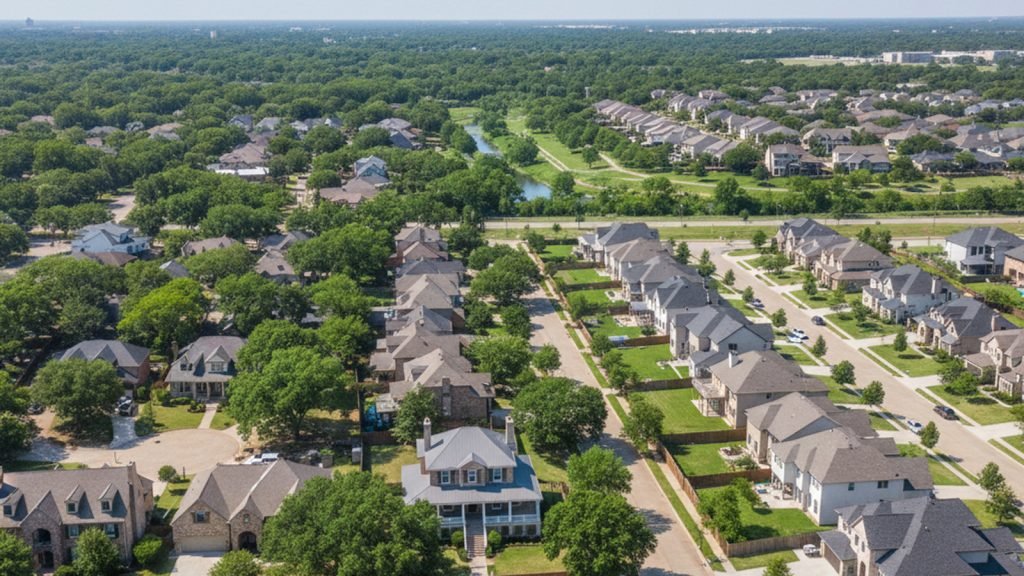
Plano followed Frisco in second place with a score of 89.6. Irvine, California, ranked third with an 85.7 score, while McKinney placed fourth with a score of 82.6.
Chandler, Arizona, completed the top five with a score of 74.9.
The results show a particularly strong showing for North Texas, with three cities appearing within the first four positions.
Texas Cities Make a Strong Showing
The performance extended beyond the Dallas-Fort Worth area. Eight Texas cities appeared in the top 20 among locations with complete observed data.
In addition to Frisco, Plano and McKinney, the Texas communities included in the top 20 were Austin, Irving, Arlington, Corpus Christi and Garland.
The concentration of Texas cities near the top of the index illustrates how different communities across the state performed across the study’s selected measures.
What Factors Were Considered?
The index examined cities through five broad areas connected to childhood well-being. These included education, economic stability, healthy housing and access to parks, along with other measures used to assess conditions affecting children.
Looking at several categories instead of relying on a single statistic provides a broader picture of the environments in which children live and grow. However, rankings of this type depend on the methodology, data availability and indicators selected by the organization conducting the study.
How Other Cities Performed
While several Texas communities performed strongly, the results varied considerably across the 100-city list.
Detroit ranked 100th with a score of 15.6. Buffalo, Cleveland, Cincinnati and Columbus were also among the cities near the bottom of the ranking.
The study associated lower-performing communities with challenges involving economic, educational and environmental conditions. These results demonstrate the significant differences that can exist between large U.S. cities when measured against the same set of childhood well-being indicators.
What the Findings Mean for Families
A city’s performance in a national index can provide families with one source of information when evaluating communities, but it does not capture every factor that may influence a family’s experience.
School options, housing costs, employment opportunities, transportation, healthcare access, neighborhood characteristics and proximity to family or support networks can all be important considerations when choosing where to live.
For communities such as Frisco, Plano and McKinney, the latest results add another data point to the discussion surrounding family life and child development in North Texas.
Conclusion
The 2026 America’s Childhood Well-being Index places North Texas prominently among U.S. communities evaluated for children’s well-being. Frisco ranked first nationally, while Plano and McKinney also reached the top four. Texas as a whole accounted for eight of the top 20 cities with complete observed data.
The findings highlight the importance of education, economic stability, housing and community resources when assessing conditions for children. At the same time, families can benefit from considering a wider range of local factors rather than relying on a single national ranking when evaluating a potential community.
FAQs
Frisco, Plano and McKinney were the three North Texas cities that ranked within the top four of the 2026 America’s Childhood Well-being Index.
Frisco, Texas, ranked first with a score of 89.8.
Eight Texas cities appeared in the top 20 among cities with complete observed data. They included Frisco, Plano, McKinney, Austin, Irving, Arlington, Corpus Christi and Garland.